1

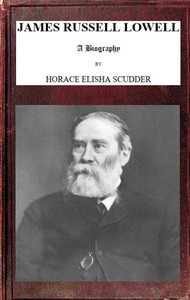
James Russell Lowell, A Biography; vol 2/2 — Reading Companion
(0 User reviews)
241
Project Gutenberg
2018
Not confirmed
Diplomats -- United States -- Biography; Authors, American -- 19th century -- Biography; Lowell, James Russell, 1819-1891
Readers of public-domain and historical texts
Project Gutenberg digital edition
en
Edition facts
Words
139,815
Reading time
608 min
Text sections
19
The catalog record for James Russell Lowell, A Biography; vol 2/2 — Reading Companion provides practical reading context through 139,815 words, 10 hr 8 min estimated reading time, and 19 detected text sections.
The text analysis averages about 18.1 words per sentence, while the detected sections provide another way to judge how the source is divided.
Project Gutenberg metadata also associates the work with “Diplomats -- United States -- Biography,” connecting these edition facts with the source record’s subject description.
Source:
Project Gutenberg record #57777
Scudder's biography of Lowell's later years traces his editorship of the Atlantic Monthly, diplomatic service in Spain and England, and evolving views on Irish land reform, drawing on letters and public writings.
Read the complete public-domain text at its original source.
Read on Project GutenbergScudder opens this second volume by positioning the Atlantic Monthly under Lowell's editorship as a magazine that deliberately combined literature, art, and politics—not as separate departments but as subjects to be treated by men with literary faculty. The early numbers, he notes, gave preponderance to imaginative literature and artistic elements, while political discussion, though limited in space, was chosen with deliberation and treated with more than newspaper care. This framing establishes a tension between aesthetic and civic concerns that runs through Lowell's later career.
The Editor as Political Writer
Scudder examines how Lowell's Atlantic editorship (1858–1865) coincided with the Civil War, a period when the magazine's political stance became unavoidable. Rather than turning the magazine into a party organ, Lowell and his contributors addressed national issues through essays and historical narratives that drew on literary training. Scudder observes that the political articles were placed at the back of the magazine, a physical arrangement that subtly signaled their relation to the imaginative work preceding them. The excerpts show Scudder's method: he quotes from Lowell's own editorial pieces to demonstrate how the poet-editor used his literary skills to argue for Union and emancipation, without descending into mere propaganda.
Diplomatic Letters and Personal Observation
Scudder draws heavily on Lowell's private correspondence during his missions to Spain (1877–1880) and England (1880–1885). A letter from Venice in 1881 reveals Lowell's eye for detail: he notes that a new canal has lessened gondoliers' custom, causing them to strike, and dryly comments that steam is stronger than they. In Paris, he describes the Revolution in person—a hotel reduced to rubble, a friend's mother living in a cave-like room, and the darkness of a pocket as illumination. These passages show Scudder using Lowell's own words to convey the texture of diplomatic life, from minor inconveniences to the aftermath of political upheaval. The biographer lets the letters speak for themselves, adding only brief connective tissue.
Ireland and the Limits of Reform
Scudder traces Lowell's views on Irish affairs back to an 1848 editorial in the National Anti-Slavery Standard, where Lowell argued that peasant proprietorship and education, not insurrection, were the only permanent safeguards against famine. He criticized Irish leaders like Smith O'Brien for lacking a clear target, writing that the only insurrection worth considering was against the conditions that made the people shiftless and prodigal. Scudder notes that these early opinions shaped Lowell's diplomatic approach decades later, when as minister to England he faced angry criticism over Irish questions. The biographer presents Lowell's consistency without endorsing his views, allowing the reader to judge the coherence of his thought across time.
Scudder's biography is built from letters, editorial articles, and official documents, with the author's voice largely confined to framing and connecting. Readers interested in Lowell's public career will find the most value in the diplomatic chapters, where the excerpts are longest and most vivid. Those seeking literary analysis should note that Scudder devotes a separate chapter to Lowell's poetry and prose after the war, but the excerpts here focus on the man of affairs rather than the man of letters.
Reading Scudder’s account of Lowell’s later years, I found myself thinking of how his public voice carried such private weight—letters about Ireland, about aging, about what home means. That same quiet ache surfaced while turning through Memories of Childhood's Slavery Days — Themes and Context. Both men seemed to hold memory close, not as relic, but as something living and tender.
There are no reviews for this eBook.
There are no comments for this eBook.
Reader reflection
Take a moment to reflect on this book
Create a short personal record of your experience with this book.
Your progress
0
/
10
2
Did this book hold your interest?
3
Would you encourage someone else to read it?
4
How demanding did the text feel?
5
Did anything about the book feel genuinely new?
6
Was the book moving at the right speed?
7
Did you relate to its people, ideas, or situations?
8
How strongly did the book affect you emotionally?
9
What changed or sharpened your thinking?
10