
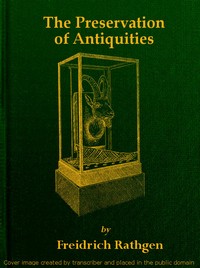
The preservation of antiquities : a handbook for curators by Friedrich Rathgen
Let's be clear: this isn't a novel. "The Preservation of Antiquities" is a technical manual from 1905. But its story is incredible. Imagine being Friedrich Rathgen, a chemist hired by the Royal Museums of Berlin. He walks into a storage room filled with treasures from Egypt, Greece, and the ancient Near East. But they're not gleaming; they're decaying. Bronze is corroding into poisonous green powder. Stone sculptures are splitting from salt crystals. Organic materials like wood and leather are just... disappearing. His job? Stop it. With almost no prior research to go on, he had to become a detective, figuring out why these objects were falling apart and inventing ways to save them.
The Story
The 'plot' follows Rathgen's methodical, chemical investigation. He breaks down artifacts by their material: stone, metal, pottery, organic stuff. For each, he explains the enemy. For limestone statues, it's acidic city air. For bronzes, it's 'bronze disease,' a contagious corrosion that can eat a whole collection. He then details his fixes—some surprisingly gentle (washing with distilled water), some dramatic (electrolytic reduction to literally pull corrosion off a metal object). This book is his battle plan, documenting what worked, what failed, and why. The central drama is the quiet, urgent race against time and chemistry itself.
Why You Should Read It
You should read it for the sheer 'aha!' factor. It makes you look at every museum object differently. That shiny Greek coin? Rathgen probably figured out how to stabilize something just like it. It's a foundational text that shows the science behind the serenity of a museum gallery. Reading his careful notes, you feel the weight of responsibility. He wasn't just cleaning dirt; he was preserving a physical link to human history, one chemical bath at a time. It’s humbling and deeply interesting.
Final Verdict
This is a niche read, but a rewarding one. Perfect for museum geeks, history fans who love 'how things work,' and anyone in STEM who enjoys historical science. It's not a cover-to-cover read for most; it's a book to dip into. Check out the chapter on Egyptian mummies or the treatment of iron weapons. You'll come away with a new appreciation for the invisible work that keeps the past present. Think of it as the secret, scientific diary of your favorite museum.
This book is widely considered to be in the public domain. Access is open to everyone around the world.
David Johnson
4 months agoThought-provoking and well-organized content.





Robert Garcia
5 months agoThe layout is perfect for tablet and e-reader devices.