
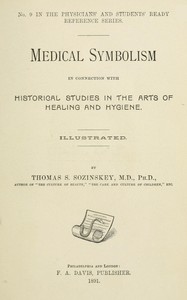
Medical symbolism in connection with historical studies in the arts of healing…
This isn't a novel with a plot in the traditional sense. Instead, think of it as a guided tour led by a very enthusiastic 19th-century doctor-historian. Thomas Sozinskey takes us on a journey through time, but instead of visiting famous battles or kings, we're visiting apothecary shops, temples, and artists' studios. His goal is to trace the hidden language of medicine.
The Story
The 'story' is the detective work. Sozinskey starts with familiar symbols, like the caduceus (the winged staff with two snakes). He then digs back through Greek myths, Roman artifacts, and medieval manuscripts to find where it came from and what it first meant. He does the same for other symbols: the mortar and pestle, the serpent bowl, even the colors and plants used in healing rituals. He shows how a practical tool, like a lancet for bloodletting, could become a powerful emblem in a painting, telling you something about the healer's knowledge or the patient's hope. The narrative is his process of connecting these dots, showing how art and medicine were once the same conversation.
Why You Should Read It
What grabbed me was how this book makes the past feel tangible. It argues that our ancestors weren't just treating diseases; they were telling stories about life, death, and hope through the objects they used. When Sozinskey explains an ancient amulet or a Renaissance painting, you realize every detail was a choice, packed with meaning we've mostly forgotten. It gives you a kind of 'X-ray vision' for history. You start to see the world in layers—the practical use of a thing and the huge weight of belief and tradition it carried. For a book written so long ago, it feels surprisingly modern in its mission to find the human story behind the icon.
Final Verdict
This is a niche gem, but a brilliant one. It's perfect for history buffs, art lovers, or anyone in the medical field who wants to know the 'why' behind their profession's symbols. Be warned: the language is of its time (1880s), so some paragraphs require a bit of focus. But if you're curious about the hidden stories in plain sight, it's worth the effort. You'll walk away seeing symbols everywhere, understanding that a simple image can be a bridge across thousands of years of human fear, ingenuity, and the never-ending quest to heal.
Legal analysis indicates this work is in the public domain. Thank you for supporting open literature.
George Lopez
1 year agoLooking at the bibliography alone, the logic behind each conclusion is easy to follow and verify. The insights gained here are worth every minute of reading.






David Taylor
10 months agoHaving explored several resources on this, I find that the nuanced approach to the central theme was better than I expected. This should be on the reading list of every serious professional.