
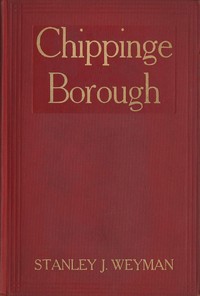
Chippinge Borough by Stanley John Weyman
Stanley J. Weyman is often called the 'Prince of Romance' for his swashbuckling historical adventures, but Chippinge Borough shows a different, more grounded side of his talent. Published in 1906, it's a political novel that feels immediate and personal, set against the backdrop of the Great Reform Act of 1832.
The Story
The plot centers on the fictional borough of Chippinge. For years, its parliamentary seat has been controlled by a local landowner, Sir Robert Vermuyden, as if it were his personal property. The story kicks off when a young, idealistic lawyer named Vaughan arrives, determined to stand as a candidate and challenge this old system. What follows isn't just a campaign; it's a full-scale invasion of a closed world. We see the drama unfold through the eyes of various townsfolk—the hesitant clergyman, the ambitious journalist, the loyal tenants, and the defiant old families. It's a story of pamphlets and speeches, but also of whispered conversations in back rooms and public confrontations in the town square. The question isn't just who will win the election, but whether the very soul of the town will be altered forever.
Why You Should Read It
What grabbed me was how alive the political struggle feels. Weyman doesn't give us dry policy debates. Instead, he shows how political change rattles personal relationships, family loyalties, and individual fortunes. Vaughan isn't a perfect hero; he's ambitious and sometimes naive. Sir Robert isn't a simple villain; he's a man clinging to a world he understands. The tension comes from seeing decent people on both sides of a historical shift. The book moves at a great pace, with enough plot twists and personal dramas to keep you turning pages, all while painting a vivid picture of small-town life in a time of huge upheaval.
Final Verdict
Chippinge Borough is a fantastic find for readers who love character-driven historical fiction. It's perfect for fans of authors like Anthony Trollope or Elizabeth Gaskell, who explore society through personal stories. You don't need to be a history expert to enjoy it—the themes of change, power, and principle are timeless. If you've ever been curious about how democracy's messy, early days played out on a local level, with all its passion and imperfections, this book offers a compelling, human-scale window into that moment. It's a smart, engaging novel that proves politics can be the ultimate human drama.
This digital edition is based on a public domain text. Use this text in your own projects freely.
Barbara Lee
9 months agoThis was exactly the kind of deep dive I was searching for, the level of detail in the second half of the book is truly impressive. Well worth the time invested in reading it.
Linda Miller
3 months agoThe balance between academic rigor and readability is perfect.
Paul Garcia
9 months agoImpressive quality for a digital edition.
Susan Garcia
1 year agoI started reading this with a critical mind, the emphasis on ethics and sustainability within the topic is commendable. It cleared up a lot of the confusion I had previously.





Matthew Perez
10 months agoInitially, I was looking for a specific answer, but the nuanced approach to the central theme was better than I expected. A refreshing and intellectually stimulating read.