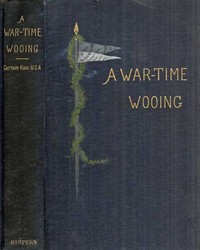
A War-Time Wooing: A Story by Charles King
Charles King, a former army officer himself, writes with an insider's view of military life, but he keeps the focus firmly on the human drama. 'A War-Time Wooing' is less about grand strategy and more about the personal battles fought off the field.
The Story
The plot kicks off with a bang—literally. Captain Paul Sterling is wounded by a gunshot at a society ball in the capital. While everyone assumes it's the work of a Confederate sympathizer, doubts begin to surface. Was it an act of war, or something far more personal? As Paul recovers from his injury, he's nursed by Edith Varick, a woman of spirit and compassion. Their relationship develops slowly and sweetly amidst the uncertainty and fear of the time. The mystery of the shooter simmers in the background, forcing both characters to question the loyalties of those around them and adding a layer of tension to their growing affection. The story becomes a dual journey: one of healing and love, and another of uncovering a dangerous truth.
Why You Should Read It
I loved this book because it surprised me. I expected a standard historical romance, but the mystery element gives it a great pulse. King doesn't waste words; the story moves at a good clip. Paul and Edith are appealing because they're sensible and kind without being boring. Their romance feels earned, a quiet refuge built in the middle of societal upheaval. What really stuck with me, though, was the atmosphere. King perfectly captures the anxiety of Washington during the war—a place full of gossip, suspicion, and blurred lines between friend and foe. It makes you feel the constant, low-grade tension of living in a divided country.
Final Verdict
This is a great pick if you enjoy historical fiction but want a break from thousand-page epics. It’s concise, character-driven, and mixes genres in a satisfying way. Perfect for readers who like their history with a side of mystery and a heartfelt, old-fashioned romance. It’s also a fascinating window into how people in the 1890s viewed the Civil War era—there’s a nostalgia and immediacy to it that modern authors can’t quite replicate. Don't go in expecting gritty realism; go in for a compelling, well-told tale that proves some stories from the past still have plenty of life.
This book is widely considered to be in the public domain. You can copy, modify, and distribute it freely.