
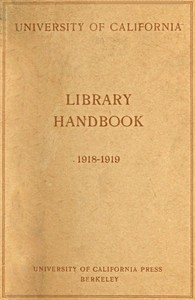
University of California Library Handbook 1918-1919
Let's be clear from the start: this is not a novel. The University of California Library Handbook 1918-1919 is exactly what it says on the cover—a practical guide for students navigating the library system. Published by the university itself, it's a slim volume full of floor plans, explanations of the Dewey Decimal system, lists of department libraries, and rules of conduct. It tells you where to find periodicals, how long you can keep a book, and who to ask for help. On the surface, it's a straightforward manual for academic success.
The Story
There isn't a plot in the traditional sense. Instead, the 'story' is the world it accidentally documents. As you flip through the pages detailing library hours and research methods, you're seeing the blueprint of a pre-digital, pre-internet center of knowledge. The handbook assumes a world where information is physical, contained within walls, and accessed through paper indexes. The narrative is in the gaps and the context. This book was printed and distributed while World War I was concluding and a devastating pandemic was sweeping the globe. The contrast between its dry, administrative tone and the historic turmoil of its publication year is where the real reading experience lies.
Why You Should Read It
I found this book strangely moving. It’s a piece of social history disguised as bureaucracy. Reading it, you get a powerful sense of the values of the time: order, self-reliance, and a deep faith in the system of organized knowledge. The handbook treats the library not just as a building, but as a tool for building a better self and a better society. In our age of instant digital access, it's humbling to see the careful, step-by-step process required to find information a hundred years ago. It made me appreciate the sheer effort behind every old research paper and thesis. This isn't about nostalgia; it's about understanding the foundations of how we learn.
Final Verdict
This is a niche read, but a rewarding one. It's perfect for history buffs, library science enthusiasts, alumni of UC, or anyone fascinated by the day-to-day texture of the past. You won't get thrilling characters or a twisting plot. What you will get is a primary source that lets you touch the routine of student life from a century ago. Think of it as literary archaeology. If you enjoy holding history in your hands and reading between the lines of official documents, you'll find this little handbook absolutely captivating.
This digital edition is based on a public domain text. It serves as a testament to our shared literary heritage.
Patricia Davis
4 months agoI've gone through the entire material twice now, and the emphasis on ethics and sustainability within the topic is commendable. This should be on the reading list of every serious professional.
Thomas Miller
3 months agoI stumbled upon this title during my weekend research and the logic behind each conclusion is easy to follow and verify. This should be on the reading list of every serious professional.
Ashley Johnson
2 months agoExactly what I was looking for, thanks!
William Brown
1 month agoI found the author's tone to be very professional yet accessible, the case studies and practical examples provided add immense value. A rare gem in a sea of mediocre content.


Kimberly Rodriguez
2 months agoThis was exactly the kind of deep dive I was searching for, the emphasis on ethics and sustainability within the topic is commendable. The price-to-value ratio here is simply unbeatable.