
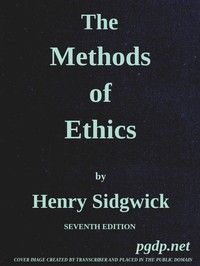
The Methods of Ethics by Henry Sidgwick
Let's be clear from the start: this isn't a novel. There's no plot in the traditional sense. Instead, think of the 'story' as the intellectual journey Sidgwick himself went on, trying to build a coherent system for making moral choices.
The Story
Sidgwick maps out the three main ways, or 'methods,' people have used to figure out what's right. First, there's Intuitionism: the idea that we just know certain basic moral truths (like 'don't lie') deep down. Then there's Egoistic Hedonism, which argues that the right action is the one that brings the most pleasure to you. Finally, there's Universal Hedonism (or Utilitarianism), which says the right action brings the most happiness to everyone overall. Sidgwick doesn't just describe them; he puts each one under a microscope. He shows their strengths, points out their internal problems, and watches them crash into each other. The central drama is whether these systems can be reconciled into one unified theory of ethics, or if we're left with a fundamental conflict at the heart of how we live.
Why You Should Read It
I picked this up expecting a dry textbook and found something surprisingly personal. Sidgwick writes with a quiet, relentless honesty. He isn't trying to sell you on one school of thought; he's trying to figure it out for himself, and he takes you along for the ride. What stuck with me was his fair treatment of every side. He gives egoism—the idea of looking out for number one—a serious, logical defense, which most moral philosophers simply won't do. This isn't about preaching; it's about thinking. Reading it feels like having the smartest, most patient guide walk you through the architecture of your own conscience.
Final Verdict
This is not a casual beach read. It's for the curious thinker who enjoys mental workouts. Perfect for anyone who has read some philosophy and wants to see how the big ideas in ethics actually fit together (or don't). It's also great for students, skeptical utilitarians, rule-followers wondering why they follow those rules, and anyone who has ever asked, 'But why *should* I be good?' If you're willing to put in the focus, Sidgwick offers one of the clearest, most balanced, and ultimately haunting maps of moral philosophy ever drawn. Just don't expect a simple destination at the end.
This work has been identified as being free of known copyright restrictions. It is now common property for all to enjoy.
Jessica Garcia
11 months agoA brilliant read that I finished in one sitting.
Kimberly White
11 months agoI started reading this with a critical mind, the critical analysis of current industry standards is very timely. I appreciate the effort that went into this curation.
Emily Davis
1 month agoThis is now a staple reference in my professional collection.
Jessica Smith
2 months agoI've gone through the entire material twice now, and the author clearly has a deep mastery of the subject matter. Highly recommended for those seeking credible information.

Nancy Hernandez
6 months agoMy first impression was quite positive because the author doesn't just scratch the surface but goes into meaningful detail. I am looking forward to the author's next publication.