
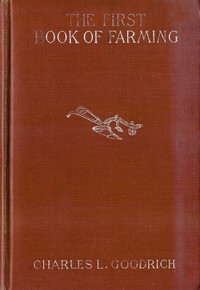
The First Book of Farming by C. L. Goodrich
Published in 1905, The First Book of Farming is exactly what its title promises: a beginner's manual. It doesn't follow a plot in the traditional sense. Instead, it's a structured journey from the ground up. C.L. Goodrich starts by asking the fundamental question: What makes good soil? He then methodically guides the aspiring farmer through selecting a farm site, understanding drainage, and choosing crops. The book covers the basics of tools, planting cycles, caring for farm animals, and even how to build a proper cold frame. It ends with a vision for the farm as a balanced, living system.
The Story
Think of it less as a story and more as a blueprint. The 'narrative' is the logical progression of turning a piece of raw land into a productive homestead. Goodrich lays out the steps clearly: evaluate your soil, enrich it with manure and crop rotation, select appropriate tools (from plows to harrows), plan your garden and fields, and integrate livestock. The conflict is simple but eternal: man versus nature, with the goal of cooperation rather than conquest. The book's momentum comes from building this knowledge base, piece by piece, until the reader can see the whole interconnected picture of a working farm.
Why You Should Read It
I picked this up out of historical curiosity and found it utterly absorbing. Goodrich's voice is patient and encouraging, like a knowledgeable neighbor leaning on a fence. Reading his detailed explanations of making compost or grafting trees is a humbling reminder of how much hands-on skill has been lost. The book is steeped in a pre-industrial mindset where thrift, observation, and working within natural limits were virtues. It's not nostalgic—it's intensely practical—but that practicality reveals a deep respect for the land. You get a real sense of the optimism of the era, a belief that with the right knowledge, anyone could build a good life from the soil.
Final Verdict
This is a perfect read for history lovers, modern homesteaders curious about traditional methods, or any gardener who wants to understand the 'why' behind old-school practices. It's not a page-turning thriller, but it's a quiet, rewarding look at the foundational knowledge that fed a nation. If you've ever enjoyed a historical farm museum or wondered how your great-grandparents might have farmed, this book is a direct line to that world. Keep a glass of lemonade handy—it makes the perfect companion for a slow afternoon read on the porch.
This title is part of the public domain archive. You can copy, modify, and distribute it freely.
Margaret Jackson
9 months agoComprehensive and well-researched.
Susan Jackson
1 year agoComprehensive and well-researched.






Kenneth Garcia
1 year agoFinally found time to read this!