
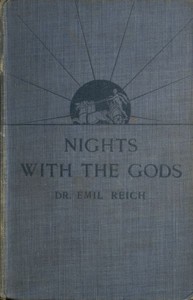
Nights with the Gods by Emil Reich
Published in 1904, Nights with the Gods is a book that feels like a secret, late-night conversation. Emil Reich, a historian, sets the scene in his own study. One by one, the major figures of Greek mythology appear to him as tangible, talkative guests. They aren't here to deliver lectures. They're here to set the record straight, share their grievances, and debate the meaning of their own stories.
The Story
There isn't a single plot in the traditional sense. Instead, each chapter is like a different evening's visit. Zeus might stop by to explain the real, political reasons behind his many romantic affairs, framing them as necessary alliances rather than mere whims. Apollo could argue about the burden of prophecy and how frustrating it is to know the future but be powerless to change it. Aphrodite might defend love and passion as the fundamental forces of the universe, not just trivial dramas. Through these dialogues, Reich acts as our stand-in—a curious, sometimes skeptical modern listener. He asks questions, challenges their views, and gets them to explain the logic (or illogic) of their legendary actions. The 'story' is the unfolding of these personalities and the new light they shed on ancient tales.
Why You Should Read It
What makes this book special is its voice. Reich gives these gods huge, relatable personalities. They're proud, petty, wise, and witty. Reading it, you stop seeing myths as a list of events and start seeing them as the outcomes of specific characters with specific motivations. The book bridges a huge gap—it makes the ancient world feel immediate and its gods feel strangely familiar. It's also quietly brilliant in how it uses these conversations to explore big ideas about power, fate, love, and art, but it does so through gossip and argument, not dry analysis.
Final Verdict
This is a perfect pick for anyone who loves Greek mythology but wants to go beyond a simple retelling. It's for the reader who enjoys 'what if' scenarios and character-driven debates. If you liked the humanized gods in novels like Circe or The Song of Achilles, you'll appreciate this early, intellectual take on the same concept. It's also a great, accessible entry point for someone new to the myths, as the gods end up explaining their own stories in the process. Be prepared for a talky, idea-focused book rather than an action-packed one. But if you're in the mood for a smart, imaginative, and often humorous dinner party with the Olympians, this century-old book still feels wonderfully fresh.
This masterpiece is free from copyright limitations. Feel free to use it for personal or commercial purposes.
Anthony Hill
6 months agoHelped me clear up some confusion on the topic.
Patricia Thomas
1 year agoI have to admit, it challenges the reader's perspective in an intellectual way. A valuable addition to my collection.
Emma Jones
11 months agoWow.





Noah Wilson
2 years agoVery interesting perspective.