1

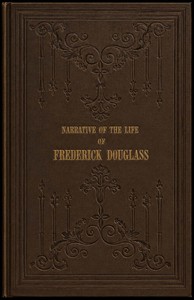
Narrative of the Life of Frederick Douglass, an American Slave — Context and Discussion
(0 User reviews)
472
Project Gutenberg
2006
Not confirmed
Douglass, Frederick, 1818-1895; African American abolitionists -- Biography; Abolitionists -- United States -- Biography; Enslaved persons -- United States -- Biography
Readers of public-domain and historical texts
Project Gutenberg digital edition
en
Edition facts
Words
44,554
Reading time
194 min
Text sections
16
The catalog record for Narrative of the Life of Frederick Douglass, an American Slave — Context and Discussion provides practical reading context through 44,554 words, 3 hr 14 min estimated reading time, and 16 detected text sections.
The text analysis averages about 20.4 words per sentence, while the detected sections provide another way to judge how the source is divided.
Project Gutenberg metadata also associates the work with “Douglass, Frederick, 1818-1895,” connecting these edition facts with the source record’s subject description.
Source:
Project Gutenberg record #23
Frederick Douglass's 1845 memoir recounts his enslavement in Maryland with precise, unembellished detail. The narrative traces his early separation from his mother, his education in literacy, and his brutal treatment under Covey, culminating in his escape. Douglass's direct voice and concrete observations ground the abolitionist argument in lived experience.
Read the complete public-domain text at its original source.
Read on Project GutenbergFrederick Douglass opens his 1845 Narrative with a stark fact: he was separated from his mother in infancy, a common practice he notes was intended to “hush the tender emotions of the heart.” This early detail sets the tone for a work that consistently grounds its abolitionist argument in precise, personal observation. The catalog subjects—African American abolitionists, abolitionists, enslaved persons—accurately describe the book’s content, but the excerpts reveal a narrative that is less a general biography and more a focused, chronological account of specific events and relationships. Douglass names his enslavers, describes their methods, and traces his own intellectual and emotional development with a clarity that resists abstraction.
The Weight of Naming and Knowing
Douglass’s narrative is built on specific names and places, a deliberate strategy that lends authority to his testimony. He identifies his first master, Captain Anthony, and the overseer Mr. Plummer, “a miserable drunkard” who “always went armed with a cowskin and a heavy cudgel.” He notes that he never saw his mother more than four or five times, and that her death “came to me like a dream.” This precision extends to his account of learning to read: he recalls the exact circumstances of receiving bread from poor white boys in exchange for lessons, and the moment his master Hugh Auld declared that literacy would “spoil” a slave. The excerpts show that Douglass does not merely assert the cruelty of slavery; he demonstrates it through accumulated, verifiable detail.
The Overseer’s Craft: Covey as a Case Study
The most extended excerpt concerns Edward Covey, the “slave-breaker” to whom Douglass was sent. Douglass describes Covey’s methods with clinical specificity: his habit of surprising slaves by crawling through cornfields, his ability to work alongside them, and his use of deception to maintain constant surveillance. The slaves called him “the snake,” a name that captures both his stealth and his menace. Douglass recounts a single day in which he narrowly escaped death twice—once when oxen crushed a gate, once when Covey whipped him for the incident—and notes that such whippings were weekly occurrences. The passage is notable for its refusal to sensationalize; Douglass presents Covey’s cruelty as systematic and calculated, not exceptional. This section of the narrative functions as a detailed case study of how slaveholders maintained control through psychological as well as physical violence.
The Paratexts: Prefaces and the Question of Authenticity
The Narrative opens with a preface by William Lloyd Garrison and a letter from Wendell Phillips, both of which attest to Douglass’s character and the truthfulness of his account. Garrison’s preface, written in a highly emotional style, describes his first encounter with Douglass at an 1841 anti-slavery convention and declares the meeting “fortunate” for the abolitionist cause. This framing device is significant: it places Douglass’s personal story within a broader political movement and anticipates skepticism from white readers. The catalog subjects list Douglass as an “African American abolitionist,” but the excerpts show that the Narrative itself is not solely a work of advocacy; it is also a carefully constructed autobiography that uses the conventions of the slave narrative genre—including authenticating documents—to establish its credibility. Readers should note how these paratexts shape the reception of Douglass’s own voice.
Douglass’s Narrative rewards attention to its structural choices: the alternation between specific incidents and reflective commentary, the use of direct address, and the careful documentation of names and dates. Readers may find it useful to track how Douglass moves from the particular—a single whipping, a single lesson in reading—to the general indictment of slavery as a system. The excerpts provided here offer only a partial view, but they suggest a work that is as much about the act of witnessing as about the events witnessed.
I read Douglass’s memoir on a grey afternoon, and what stayed with me was how he documents imprisonment through precision—each room, each hour, each bruise. That careful accounting made me think of another captive who kept a record of his own chains. There is a quiet kinship between such men across decades, and I found myself turning to The Life and Adventures of Baron Trenck, Volume 1 — A Reader’s Guide for its measured, almost resigned tone. Both voices share a stubborn clarity, a way of holding their dignity by naming things exactly as they were.
There are no reviews for this eBook.
There are no comments for this eBook.
Reader reflection
Your personal reading reflection
Build a private reading journal entry for this title.
Your progress
0
/
10
2
What was your overall reaction to the book?
3
Would you recommend this book to another reader?
4
How demanding did the text feel?
5
Was the book what you thought it would be?
6
How would you rate its originality?
7
Is this a title worth rereading?
8
Did the story or argument move comfortably?
9
What did this book teach you most?
10